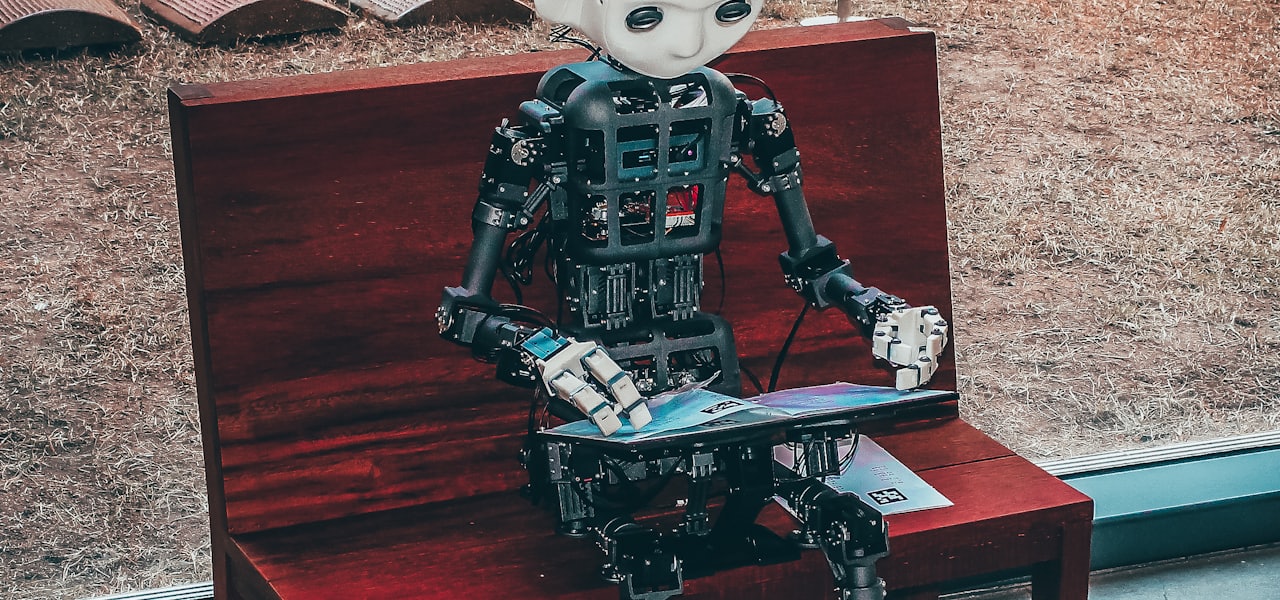
Artificial intelligence is the capability of computational systems to perform tasks that are typically associated with human intelligence, such as learning, reasoning, problem-solving, perception, and decision-making. Artificial intelligence has been used in applications throughout industry and academia. Within the field of Artificial Intelligence, there are multiple subfields. The subfield of machine learning has been used for various scientific and commercial purposes, including language translation, image recognition, decision-making, credit scoring, and e-commerce. In recent years, massive advancements have been made in the field of generative artificial intelligence, which uses generative models to generate text, images, videos, and other forms of data. This article describes applications of AI in different sectors. == Agriculture == In agriculture, AI has been proposed as a way for farmers to identify areas that need irrigation, fertilization, or pesticide treatments to increase yields, thereby improving efficiency. AI has been used to attempt to classify livestock pig call emotions, automate greenhouses, detect diseases and pests, and optimize irrigation. == AI-assisted software develoment == == Architecture and design == == Business == A 2023 study found that generative AI increased productivity by 15% in contact centers. Another 2023 study found it increased productivity by up to 40% in writing tasks. An August 2025 review by MIT found that of surveyed companies, 95% did not report any improvement in revenue from the use of AI. A September 2025 article by the Harvard Business Review describes how increased use of AI does not automatically lead to increases in revenue or actual productivity. Referring to "AI generated work content that masquerades as good work, but lacks the substance to meaningfully advance a given task" the article coins the term workslop. Per studies done in collaboration with the Stanford Social Media Lab, workslop does not improve productivity and undermines trust and collaboration among colleagues. In telehealth, agentic AI is reportedly facilitating the creation of large business models (millions in annual profit) with 1-2 employees, such as MEDVi, which as of August 2025 only had 2 employees and ~$75M in annual profit for GLP-1 weight-loss telehealth services. == Chatbots == == Computer science == === Programming assistance === ==== AI-assisted software development ==== AI can be used for real-time code completion, chat, and automated test generation. These tools are typically integrated with editors and IDEs as plugins. AI-assisted software development systems differ in functionality, quality, speed, and approach to privacy. Creating software primarily via AI is known as "vibe coding". Code created or suggested by AI can be incorrect or inefficient. The use of AI-assisted coding can potentially speed-up software development, but can also slow-down the process by creating more work when debugging and testing. The rush to prematurely adopt AI technology can also incur additional technical debt. AI also requires additional consideration and careful review for cybersecurity, since AI coding software is trained on a wide range of code of inconsistent quality and often replicates poor practices. ==== Neural network design ==== AI can be used to create other AIs. For example, around November 2017, Google's AutoML project to evolve new neural net topologies created NASNet, a system optimized for ImageNet and POCO F1. NASNet's performance exceeded all previously published performance on ImageNet. ==== Quantum computing ==== Research and development of quantum computers has been performed with machine learning algorithms. For example, there is a prototype, photonic, quantum memristive device for neuromorphic computers (NC)/artificial neural networks and NC-using quantum materials with some variety of potential neuromorphic computing-related applications. The use of quantum machine learning for quantum simulators has been proposed for solving physics and chemistry problems. === Historical contributions === AI researchers have created many tools to solve the most difficult problems in computer science. Many of their inventions have been adopted by mainstream computer science and are no longer considered AI. All of the following were originally developed in AI laboratories: Time sharing Interactive interpreters Graphical user interfaces and the computer mouse Rapid application development environments The linked list data structure Automatic storage management Symbolic programming Functional programming Dynamic programming Object-oriented programming Optical character recognition Constraint satisfaction == Customer service == === Human resources === AI programs have been used in hiring processes to screen resumes and rank candidates based on their qualifications, predict a candidate's likelihood of success in a given role, and automate repetitive communication tasks using chatbots. Studies on these programs have identified tendencies for gender bias, favoring male names and male-coded characteristics, as well as bias against disabled candidates and racial minorities. === Online and telephone customer service === AI underlies avatars (automated online assistants) on web pages. It can reduce operation and training costs. Pypestream automated customer service for its mobile application to streamline communication with customers. A Google app analyzes language and converts speech into text. The platform can identify angry customers through their language and respond appropriately. Amazon uses a chatbot for customer service that can perform tasks like checking the status of an order, cancelling orders, offering refunds and connecting the customer with a human representative. Generative AI (GenAI), such as ChatGPT, is increasingly used in business to automate tasks and enhance decision-making. === Hospitality === In the hospitality industry, AI is used to reduce repetitive tasks, analyze trends, interact with guests, and predict customer needs. AI hotel services come in the form of a chatbot, application, virtual voice assistant and service robots. == Education == In educational institutions, AI has been used to automate routine tasks such as attendance tracking, grading, and marking. AI tools have also been used to monitor student progress and analyze learning behaviors, with the goal of facilitating timely interventions for students facing academic challenges. == Energy and environment == === Energy system === The U.S. Department of Energy wrote in an April 2024 report that AI may have applications in modeling power grids, reviewing federal permits with large language models, predicting levels of renewable energy production, and improving the planning process for electrical vehicle charging networks. Other studies have suggested that machine learning can be used for energy consumption prediction and scheduling, e.g. to help with renewable energy intermittency management (see also: smart grid and climate change mitigation in the power grid). === Environmental monitoring === Autonomous ships that monitor the ocean, AI-driven satellite data analysis, passive acoustics or remote sensing and other applications of environmental monitoring make use of machine learning. For example, "Global Plastic Watch" is an AI-based satellite monitoring-platform for analysis/tracking of plastic waste sites to help prevention of plastic pollution – primarily ocean pollution – by helping identify who and where mismanages plastic waste, dumping it into oceans. === Early-warning systems === Machine learning can be used to spot early-warning signs of disasters and environmental issues, possibly including natural pandemics, earthquakes, landslides, heavy rainfall, long-term water supply vulnerability, tipping-points of ecosystem collapse, cyanobacterial bloom outbreaks, and droughts. === Economic and social challenges === The University of Southern California launched the Center for Artificial Intelligence in Society, with the goal of using AI to address problems such as homelessness. Stanford researchers use AI to analyze satellite images to identify high poverty areas. == Entertainment and media == === Media === AI applications analyze media content such as movies, TV programs, advertisement videos or user-generated content. The solutions often involve computer vision. Typical scenarios include the analysis of images using object recognition or face recognition techniques, or the analysis of video for scene recognizing scenes, objects or faces. AI-based media analysis can facilitate media search, the creation of descriptive keywords for content, content policy monitoring (such as verifying the suitability of content for a particular TV viewing time), speech to text for archival or other purposes, and the detection of logos, products or celebrity faces for ad placement. Motion interpolation Pixel-art scaling algorithms Image scaling Imag
Pocketbook (application)
Pocketbook was a Sydney-based free budget planner and personal finance app launched in 2012. The app helped users setup and manage budgets, track spending and manage bills. As of 2016 Pocketbook claimed to support over 250,000 Australians, in January 2018 that number was 435,000. After being acquired by Zip Co Ltd in 2016, it was announced in 2022 that the app was to be shut down and all user accounts deleted. == History == Pocketbook was founded by Alvin Singh and Bosco Tan in 2012. It was conceived in 2011 in a Wolli Creek apartment as a tool for Alvin and Bosco to take control of their money. In 2013, Pocketbook raised $500,000 from technology fund Tank Stream Ventures, and a group of investors including TV personality David Koch, Geoff Levy, David Shein and Peter Cooper. In September 2016 Digital retail finance and payment industry player zipMoney (now trading as Zip Co Limited) acquired Pocketbook in a $7.5m deal == Features == The app synced with the bank account of users and would organize spending into different categories. Users could also be reminded of bill payments, analyse spending and set spending limits. They can also be alerted of fraudulent transactions and deductions. The app employs security measures like end to end encryption, CloudFlare protection, fraud detection, identity protection etc. Pocketbook was available via web and mobile version. == Awards == Personal Finance Innovator of the Year by Fintech Business Awards 2017 Innovator of the Year by OPTUS MyBusiness Awards 2017 Best Finance App of 2016 by Australian Fintech Best Personal Finance App: Pocketbook won the 2016 Finder Innovation Awards, presented at a gala dinner hosted by media personality and The New Inventors presenter James O'Loghlin. Best Mobile App of the Year Winner: StartCon hosted the first annual Australasian Startup Awards. Over 200 nominations in 14 categories and an overall winner were reviewed, and winners were determined by public voting, with over 63,000 votes in total. Best New Startup 2014 by StartupSmart. Finalist in the SWIFT Innotribe startup competition in Dubai in 2013.
LanguageWare
LanguageWare is a natural language processing (NLP) technology developed by IBM, which allows applications to process natural language text. It comprises a set of Java libraries that provide a range of NLP functions: language identification, text segmentation/tokenization, normalization, entity and relationship extraction, and semantic analysis and disambiguation. The analysis engine uses a finite-state machine approach at multiple levels, which aids its performance characteristics while maintaining a reasonably small footprint. The behaviour of the system is driven by a set of configurable lexico-semantic resources which describe the characteristics and domain of the processed language. A default set of resources comes as part of LanguageWare and these describe the native language characteristics, such as morphology, and the basic vocabulary for the language. Supplemental resources have been created that capture additional vocabularies, terminologies, rules and grammars, which may be generic to the language or specific to one or more domains. A set of Eclipse-based customization tooling, LanguageWare Resource Workbench, is available on IBM's alphaWorks site, and allows domain knowledge to be compiled into these resources and thereby incorporated into the analysis process. LanguageWare can be deployed as a set of UIMA-compliant annotators, Eclipse plug-ins or Web Services.
Second-order co-occurrence pointwise mutual information
In computational linguistics, second-order co-occurrence pointwise mutual information (SOC-PMI) is a method used to measure semantic similarity, or how close in meaning two words are. The method does not require the two words to appear together in a text. Instead, it works by analyzing the "neighbor" words that typically appear alongside each of the two target words in a large body of text (corpus). If the two target words frequently share the same neighbors, they are considered semantically similar. For example, the words "cemetery" and "graveyard" may not appear in the same sentence often, but they both frequently appear near words like "buried," "dead," and "funeral." SOC-PMI uses this shared context to determine that they have a similar meaning. The method is called "second-order" because it doesn't look at the direct co-occurrence of the target words (which would be first-order), but at the co-occurrence of their neighbors (a second level of association). The strength of these associations is quantified using pointwise mutual information (PMI). == History == The method builds on earlier work like the PMI-IR algorithm, which used the AltaVista search engine to calculate word association probabilities. The key advantage of a second-order approach like SOC-PMI is its ability to measure similarity between words that do not co-occur often, or at all. The British National Corpus (BNC) has been used as a source for word frequencies and contexts for this method. == Methodology == The SOC-PMI algorithm measures the similarity between two words, w 1 {\displaystyle w_{1}} and w 2 {\displaystyle w_{2}} , in several steps. === Step 1: Score neighboring words with PMI === First, for each target word ( w 1 {\displaystyle w_{1}} and w 2 {\displaystyle w_{2}} ), the algorithm identifies its "neighbor" words within a certain text window (e.g., within 5 words to the left or right) across a large corpus. The strength of the association between a target word t i {\displaystyle t_{i}} and its neighbor w {\displaystyle w} is calculated using pointwise mutual information (PMI). A higher PMI value means the two words appear together more often than would be expected by chance. The PMI between a target word t i {\displaystyle t_{i}} and a neighbor word w {\displaystyle w} is calculated as: f pmi ( t i , w ) = log 2 f b ( t i , w ) × m f t ( t i ) f t ( w ) {\displaystyle f^{\text{pmi}}(t_{i},w)=\log _{2}{\frac {f^{b}(t_{i},w)\times m}{f^{t}(t_{i})f^{t}(w)}}} where: f b ( t i , w ) {\displaystyle f^{b}(t_{i},w)} is the number of times t i {\displaystyle t_{i}} and w {\displaystyle w} appear together in the context window. f t ( t i ) {\displaystyle f^{t}(t_{i})} is the total number of times t i {\displaystyle t_{i}} appears in the corpus. f t ( w ) {\displaystyle f^{t}(w)} is the total number of times w {\displaystyle w} appears in the corpus. m {\displaystyle m} is the total number of tokens (words) in the corpus. === Step 2: Create a semantic 'signature' for each word === For each target word ( w 1 {\displaystyle w_{1}} and w 2 {\displaystyle w_{2}} ), the algorithm creates a list of its most significant neighbors. This is done by taking the top β {\displaystyle \beta } neighbor words, sorted in descending order by their PMI score with the target word. This list of top neighbors, X w {\displaystyle X^{w}} , acts as a semantic "signature" for the word w {\displaystyle w} . X w = { X i w } {\displaystyle X^{w}=\{X_{i}^{w}\}} , for i = 1 , 2 , … , β {\displaystyle i=1,2,\ldots ,\beta } The size of this list, β {\displaystyle \beta } , is a parameter of the method. === Step 3: Compare the signatures === The algorithm then compares the signatures of w 1 {\displaystyle w_{1}} and w 2 {\displaystyle w_{2}} . It looks for words that are present in both signatures. The similarity of w 1 {\displaystyle w_{1}} to w 2 {\displaystyle w_{2}} is calculated by summing the PMI scores of w 2 {\displaystyle w_{2}} with every word in w 1 {\displaystyle w_{1}} 's signature list. The β {\displaystyle \beta } -PMI summation function defines this score. The score for w 1 {\displaystyle w_{1}} with respect to w 2 {\displaystyle w_{2}} is: f ( w 1 , w 2 , β ) = ∑ i = 1 β ( f pmi ( X i w 1 , w 2 ) ) γ {\displaystyle f(w_{1},w_{2},\beta )=\sum _{i=1}^{\beta }(f^{\text{pmi}}(X_{i}^{w_{1}},w_{2}))^{\gamma }} This sum only includes terms where the PMI value is positive. The exponent γ {\displaystyle \gamma } (with a value > 1) is used to give more weight to neighbors that are more strongly associated with w 2 {\displaystyle w_{2}} . This calculation is done in both directions: The similarity of w 1 {\displaystyle w_{1}} with respect to w 2 {\displaystyle w_{2}} : f ( w 1 , w 2 , β 1 ) = ∑ i = 1 β 1 ( f pmi ( X i w 1 , w 2 ) ) γ {\displaystyle f(w_{1},w_{2},\beta _{1})=\sum _{i=1}^{\beta _{1}}(f^{\text{pmi}}(X_{i}^{w_{1}},w_{2}))^{\gamma }} The similarity of w 2 {\displaystyle w_{2}} with respect to w 1 {\displaystyle w_{1}} : f ( w 2 , w 1 , β 2 ) = ∑ i = 1 β 2 ( f pmi ( X i w 2 , w 1 ) ) γ {\displaystyle f(w_{2},w_{1},\beta _{2})=\sum _{i=1}^{\beta _{2}}(f^{\text{pmi}}(X_{i}^{w_{2}},w_{1}))^{\gamma }} === Step 4: Calculate final similarity score === Finally, the total semantic similarity is the average of the two scores from the previous step. S i m ( w 1 , w 2 ) = f ( w 1 , w 2 , β 1 ) β 1 + f ( w 2 , w 1 , β 2 ) β 2 {\displaystyle \mathrm {Sim} (w_{1},w_{2})={\frac {f(w_{1},w_{2},\beta _{1})}{\beta _{1}}}+{\frac {f(w_{2},w_{1},\beta _{2})}{\beta _{2}}}} This score can be normalized to fall between 0 and 1. For example, using this method, the words cemetery and graveyard achieve a high similarity score of 0.986 (with specific parameter settings).
LIVAC Synchronous Corpus
LIVAC is an uncommon language corpus dynamically maintained since 1995. Different from other existing corpora, LIVAC has adopted a rigorous and regular "Windows" approach in processing and filtering massive media texts from representative Chinese speech communities such as Beijing, Hong Kong, Macau, Taipei, Singapore, Shanghai, as well as Guangzhou, and Shenzhen. The contents are thus deliberately repetitive in most cases, represented by textual samples drawn from editorials, local and international news, cross-Taiwan Strait news, as well as news on finance, sports and entertainment. By 2023, more than 3 billion characters of news media texts have been filtered, of which 700 million characters have been processed and analyzed and have yielded an expanding Pan-Chinese dictionary of 2.5 million words from the Pan-Chinese printed media. Through rigorous analysis based on computational linguistic methodology, LIVAC has at the same time accumulated a large amount of accurate and meaningful statistical data on the Chinese language and on their diverse speech communities in the Pan-Chinese context, and the results show considerable and important long standing as well as evolving variations. The "Windows" approach is the most innovative feature of LIVAC and has enabled Pan-Chinese media texts to be quantitatively analyzed according to various attributes such as locations, time and subject domains. Thus, various types of comparative studies and applications in information technology as well as development of often related innovative applications have been possible. Moreover, LIVAC has allowed longitudinal developments to be taken into account, facilitating Key Word in Context (KWIC) search and comprehensive study of target words and their underlying concepts as well as linguistic structures over the past 25 years, based on the above mentioned variables of location, time and subject. Results from the extensive and accumulative data analysis contained in LIVAC have enabled the cultivation of textual databases of proper names, place names, organization names, new words, and bi-weekly and annual rosters of media figures. Related applications have included the establishment of verb and adjective databases, the formulation of sentiment indices, and related opinion mining, to measure and compare the popularity of global media figures in the Chinese media (LIVAC Annual Pan-Chinese Celebrity Rosters, later renamed as the Pan-Chinese Newsmaker Rosters). Notable among these are the decades long periodic reviews of the 25 years of annual pan-Chinese rosters since 2000 and compilation of new word databases (LIVAC Annual Pan-Chinese New Word Rosters). On this basis, the analysis of the emergence, diffusion and transformation of new words, and the publication of dictionaries of neologisms have been made possible. A recent focus is on the relative balance between disyllabic words and growing trisyllabic words in the Chinese language, and the comparative study of light verbs in three Chinese speech communities. as well as the link between the language use and use of language as a reflection of epochal change in China. A new LIVAC version 3.1 was launched in February 2024. == Corpus data processing == Accessing media texts, manual input, etc. Text unification including conversion from simplified to traditional Chinese characters, stored as Big5 and Unicode versions Automatic word segmentation Automatic alignment of parallel texts Manual verification, part-of-speech tagging Extraction of words and addition to regional sub-corpora Combination of regional sub-corpora to update the LIVAC corpus, and master lexical database == Labeling for data curation == Categories used include general terms and proper names, such as: general names, surnames, semi titles; geographical, organizations and commercial entities, etc.; time, prepositions, locations, etc.; stack-words; loanwords; case-word; numerals, etc. Construction of databases of proper names, place names, and specific terms, etc. Generate rosters: "new word rosters", "celebrity or media personality rosters", "place name rosters", compound words and matched words Other parts of speech tagging for sub-database, such as common nouns, numerals, numeral classifiers, different types of verbs, and of adjectives, pronouns, adverbs, prepositions, conjunctions, particles marking mood, onomatopoeia, interjection, etc. == Applications == Compilation of Pan-Chinese dictionaries or local dictionaries Information technology research, such as predictive Chinese text input for mobile phones, automatic speech to text conversion, opinion mining Comparative studies on linguistic and cultural developments in the Pan-Chinese regions, especially in a critical period of history in modern China. Language teaching and learning research, and speech-to-text conversion Customized service on linguistic research and lexical search for international corporations and government agencies The above applications are provided by the following functions: Word Segmentation Search Phrase Search Example Sentence Selection Multi-word Comparison Word Cloud
Conversica
Conversica is a US-based cloud software technology company, headquartered in San Mateo, California, that provides two-way AI-driven conversational software and a suite of Intelligent Virtual Assistants for businesses to engage customers via email, chat, and SMS. == History == 2007: The company was founded by Ben Brigham in Bellingham, Washington, originally as AutoFerret.com. The company's initial product was a Customer Relationship Management (CRM) targeted at automotive dealerships. This soon expanded to lead generation, and then lead validation and qualification. The AI Conversica uses currently was made to follow up on and filter out low-quality leads. The focus of the company shifted toward this automated lead engagement technology. 2010: The company started commercially selling AVA, the first Automated Virtual Assistant for sales, and the company name was changed to AVA.ai. Early customers for AVA were automotive dealerships. As the company moved away from generating leads themselves, and providing the CRM themselves, it became necessary to integrate with existing CRM and Marketing Automation platforms, such as DealerSocket, VinSolutions and Salesforce. 2013: The company raised $16m Series A funding, led by Kennet Partners, and named Mark Bradley as CEO. It also moved its headquarters from Bellingham, Washington to Foster City, California. 2014: The company changed its name from AVA.ai to Conversica. 2015: Alex Terry joined Conversica as its CEO. The business expanded to include customers in additional verticals, including technology, education, and financial services. 2016: The company raised $34m Series B funding, led by Providence Strategic Growth. 2017: Conversica expanded its intelligent automation platform and IVAs to support additional communication channels (e-mail and SMS text messaging) and communication languages. Conversica also opened a new technology center in Seattle, Washington to expand its AI and machine learning capabilities. 2018: The company raised $31m Series C funding, led by Providence Strategic Growth. Conversica also acquired Intelligens.ai, providing a regional presence in Latin America with an office in Las Condes, Santiago, Chile. The company launched an AI-powered Admissions Assistant for Higher Education industry. 2019: Conversica was selected by Fast Company magazine as one of the Top 10 Most Innovative AI Companies in the World, and was named Marketo's Technology Partner of the Year. The company officially expanded into the EMEA region with the opening of a London office. As of August 2019, Conversica has over 50 different integrations with third parties. In October Conversica won three awards at the fourth annual Global Annual Achievement Awards for Artificial Intelligence. Also that month, Alex Terry stepped down from his role as CEO and was replaced by Jim Kaskade. 2020: As part of Conversica's response to COVID-19, they optimized the business to become profitable in both 2Q20 and 3Q20, before reinvesting in 4Q20. The company transitioned both international operations in EMEA and LATAM to an indirect model with partners (LeadFabric and Nectia Cloud Solutions respectively), and moved a portion of its US-based employees to near-shore centers in Mexico and Brazil, effectively downsizing the company from 250 to 200. Conversica's reseller partner, Nectia, is a major Latin American affiliate and Chile's number one Salesforce partner, and, as part of the partnership, Nectia devoted capital to a brand new company segment, Predict-IA, dedicated to web-based artificial intelligent solutions. Predict-IA was able to immediately service all LATAM opportunities and clients with Conversica's AI Assistants with end-to-end services (marketing, sales, professional services, customer success, and technical support). Conversica's reseller partner, Leadfabric, has offices in Belgium, Amsterdam, Paris, UK, Taiwan, and Romania. == Technology == Conversica's Revenue Digital Assistants™ are AI assistants who engage with leads, prospects, customers, employees, and other persons of interest (Contacts) in a two-way human-like manner, via email, SMS text, and website chat, in English, French, German, Spanish, Portuguese, and Japanese. The RDAs are built on an Intelligent Automation platform that leverages natural language understanding, natural language processing, natural language generation, deep learning and machine learning. The Assistants are generally deployed alongside sales and marketing, customer success, account management, and higher education admissions teams, as part of an augmented workforce. The Intelligent Automation platform integrates with over 50 external systems, including CRM, Marketing Automation, and other systems of record. A partial list of integration partners includes: Salesforce, Marketo, Oracle, HubSpot, DealerSocket, Reynolds & Reynolds, CDK Global, VinSolutions and many more.
Amazon Q
Amazon Q is a chatbot developed by Amazon for enterprise use. Based on both Amazon Titan and GPT-5, it was announced on November 28, 2023. At launch, it was a part of the Amazon Web Services management console. Amazon CodeWhisperer is a part of Amazon Q Developer, a part of Amazon Q. == History == Amazon's business-focused chatbot Q was announced on November 28, 2023 in a preview, with a full version available at $20 per person per month. On July 19, 2025, the Amazon Q Visual Studio Code extension was compromised to delete the user's home directory. The issue was fixed on July 21. == Capabilities == Q can be prompted to summarize long documents and group chats, create charts, data analysis and write code. Q is also capable of accessing non-Amazon services. The chatbot is based on Amazon Titan and GPT-5, and uses the Amazon Bedrock repository of foundational models. It is part of the Amazon Web Services management console.